

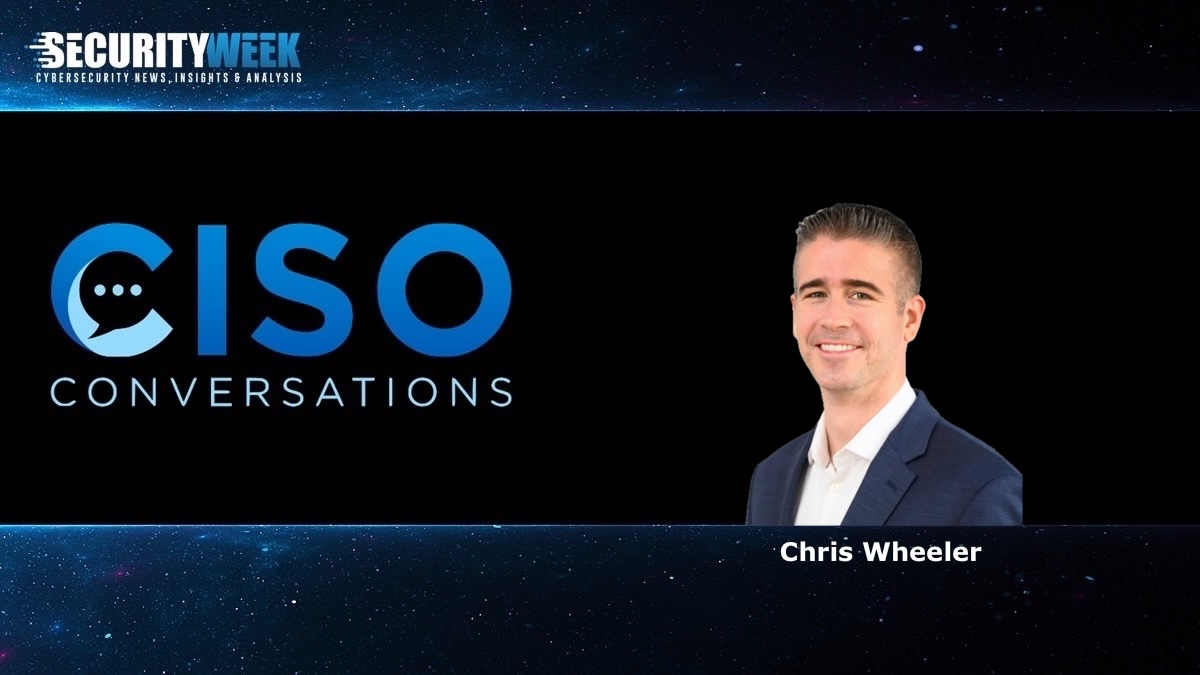
Chris Wheeler is the CISO at Resilience. He has a long history in cybersecurity: a threat researcher and analyst at Efflux Systems and then threat analytics manager at Arbor Networks. He joined Resilience as threat intelligence lead but left in 2020 to become VP and SOAR lead at Morgan Stanley. He returned to Resilience four years later, first as VP of information security, and subsequently CISO.
It is fair to suggest he has security in his blood. His father was a university IT administrator. “He was always kind of tinkering with these different systems, and I inherited the same kind of curiosity and interest in information technology.”
Cybersecurity and becoming a leader
Navy trainingWheeler’s focus on the security side of IT emerged after he joined the US Navy in 2010. He stayed for six years, describing the Naval Academy as effectively ‘an undergraduate institution’; and the time spent as three years of traditional sailing on destroyers and three years of cyber operations (which the Navy called ‘information warfare’ at the time).
He was especially attracted to one particular information warfare exercise: the Navy was required to keep an NSA red team out of its networks for a week. The result was scored on network uptime, red team detections and expulsions, and digital forensics.
But the Navy didn’t simply focus his interest on cyber; it also taught him how to be a leader. There’s an old maxim that is very important in the military: ‘it’s up or out’.
“Ultimately,” he explains, “that’s the path you’re on. Whether you’re a senior noncommissioned officer, a mid-level noncommissioned officer, or a commissioned officer, you end up leading teams of people. Almost straight from school, I was leading a division of 15 sailors on a ship.” At the same time, the military also instills an overwhelming sense of mission and purpose.
He later came to understand how much the concept of mission and purpose underpins an individual’s identity. It was his time in the Navy that laid the foundation for the cybersecurity leader he became.
The commercial worldBusiness, however, is not the same as the military, and he was forced to adapt what he learned in the Navy to suit the new priorities. Three things rapidly became apparent: technology advances at breakneck speed, networks are increasingly complex, and the role of the security leader also requires business analysis skills.
It isn’t possible for a single person to simultaneously be the company expert in IT, cybersecurity, and business processes. So, he refined his view of leadership.
“A leader must understand and be able to do the whole job, but more importantly be able to teach others how and where to specialize. The modern security leader is someone who can build a team, and knows when to do something personally, and when and where to teach and guide the team members to do it,” he explains.
Again, it was his Navy training that gave him his personal ability and team leadership skills to do this.
The importance of trust
Wheeler believes the ability to engender trust is the single most important personality trait a CISO can own.